See and understand that each of your finger is a channel for the healing power of the universe, and that as you touch the world, you are changing and transferring this loving energy and you are healing everyone and everything.

Tag: Spirit

What Self-care practices do I need to prioritize as a healer to nourish my mind, body, and spirit?

As a healer, it’s essential to prioritize self-care practices that nourish your mind, body, and spirit. Here are some practices to consider:

Mind:

1. Meditation: Regular meditation helps calm the mind, reduce stress, and increase focus. Even 10-15 minutes a day can be beneficial.

2. Journaling: Reflecting on your thoughts, feelings, and experiences through journaling can help you process your emotions and gain insight into your mind.

3. Reading: Reading books, articles, or online resources on topics that interest you can help expand your knowledge and stimulate your mind.

4. Learning: Engage in ongoing education and training to stay updated on the latest healing practices and techniques.

5. Grounding techniques: Practice grounding techniques, such as deep breathing, progressive muscle relaxation, or visualization, to help manage stress and anxiety.

Body:

1. Exercise: Regular physical activity, such as yoga, walking, or dancing, can help reduce stress, improve mood, and increase energy.

2. Healthy eating: Focus on consuming whole, nutrient-dense foods that promote energy and vitality.

3. Sleep: Prioritize getting 7-8 hours of sleep each night to help your body and mind recharge.

4. Self-care rituals: Engage in self-care rituals, such as taking a warm bath, getting a massage, or practicing yoga, to help relax and rejuvenate your body.

5. Bodywork: Consider receiving regular bodywork, such as massage or acupuncture, to help release tension and promote relaxation.

Spirit:

1. Connection with nature: Spend time in nature, whether walking, hiking, or simply sitting in a park or garden, to help you feel grounded and connected to the natural world.

2. Meditation and prayer: Engage in meditation and prayer practices that help you connect with a higher power or your own inner wisdom.

3. Energy work: Consider practicing energy work, such as Reiki or qigong, to help balance and align your energy.

4. Creative expression: Engage in creative activities, such as painting, drawing, or writing, to help express your emotions and connect with your inner self.

5. Community: Surround yourself with a supportive community of like-minded individuals who share your values and passions.

Additional Tips:

1. Schedule self-care: Treat self-care as a non-negotiable part of your daily or weekly routine.

2. Listen to your body: Pay attention to your physical and emotional needs, and take rest when needed.

3. Set boundaries: Establish clear boundaries with clients, colleagues, and loved ones to protect your time and energy.

4. Practice self-compassion: Treat yourself with kindness, understanding, and patience, just as you would a close friend.

5. Seek support: Surround yourself with a supportive network of peers, mentors, or friends who understand the challenges and rewards of being a healer.

By prioritizing these self-care practices, you’ll be better equipped to nourish your mind, body, and spirit, and maintain your energy and well-being as a healer.


Healer’s Pure Heart, Spirit and Intent

The concept of a Healer’s Pure Heart, Spirit, and Intent is rooted in various spiritual and holistic traditions. It refers to the ideal state of being that a healer should strive for in order to effectively facilitate healing and promote well-being in others.

Here’s a breakdown of each aspect:

1. Pure Heart: A Pure Heart represents a state of emotional clarity, compassion, and unconditional love. It’s a heart that is free from judgment, ego, and personal biases. A healer with a Pure Heart is able to approach each individual with empathy, understanding, and a genuine desire to help.

2. Spirit: The Spirit refers to the healer’s connection to a higher power, the universe, or a divine energy. It’s the aspect of the healer that transcends the physical realm and taps into the mysteries of life. A healer with a strong Spirit is able to access and channel energies that promote healing, growth, and transformation.

3. Intent: Intent refers to the healer’s clear and focused intention to facilitate healing and promote well-being. It’s the healer’s purpose, motivation, and commitment to helping others. A healer with a clear Intent is able to set aside their own ego and personal interests, and focus entirely on the needs of the individual they are working with.

When a healer embodies a Pure Heart, strong Spirit, and clear Intent, they become a powerful conduit for healing energies. This state of being allows them to:

* Create a safe and supportive environment for healing to occur

* Tune into the individual’s unique energy and needs

* Channel and transmit healing energies with clarity and precision

* Navigate complex emotional and spiritual issues with compassion and understanding

* Empower individuals to take ownership of their healing journey

In essence, a Healer’s Pure Heart, Spirit, and Intent are the foundation upon which effective and compassionate healing is built. By cultivating these qualities, healers can become more effective, empathetic, and holistic in their practice, and create a deeper, more meaningful connection with those they serve.

This article is written to promote and support:

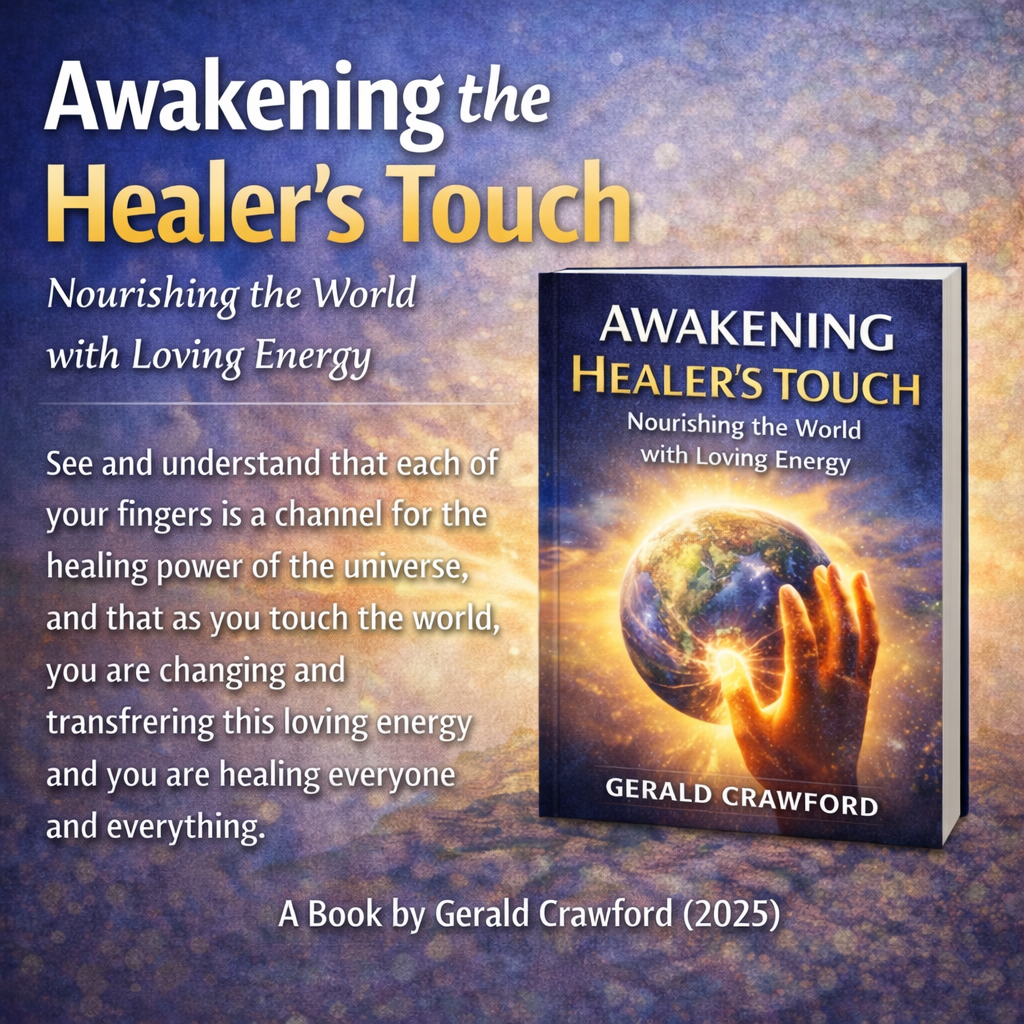
Awakening the Healer’s Touch: Nourishing the World with Loving Energy – A Book by Gerald Crawford (2025)

See and understand that each of your finger is a channel for the healing power of the universe, and that as you touch the world, you are changing and transferring this loving energy and you are healing everyone and everything.

Please have a look at:

The Role of Gratitude and Appreciation – Discussion of the impact of gratitude on the body, mind, and spirit

Let’s explore the impact of gratitude on the body, mind, and spirit.

The Impact of Gratitude on the Body

Gratitude has a profound impact on our physical health, including:

1. Reduced inflammation: Studies have shown that practicing gratitude can reduce inflammation, which can lead to a range of chronic diseases.

2. Improved sleep: Gratitude has been linked to improved sleep quality, which is essential for physical health and well-being.

3. Boosted immune system: Gratitude has been shown to boost the immune system, helping to fight off infection and disease.

4. Lower blood pressure: Practicing gratitude can help to lower blood pressure, reducing the risk of heart disease and stroke.

5. Improved digestion: Gratitude has been linked to improved digestion, reducing symptoms of irritable bowel syndrome and other digestive disorders.

The Impact of Gratitude on the Mind

Gratitude also has a significant impact on our mental health, including:

1. Reduced stress and anxiety: Practicing gratitude can reduce stress and anxiety, promoting a sense of calm and well-being.

2. Improved mood: Gratitude has been linked to improved mood, reducing symptoms of depression and anxiety.

3. Increased self-esteem: Gratitude can increase self-esteem, promoting a positive self-image and confidence.

4. Enhanced resilience: Gratitude can enhance resilience, helping us to bounce back from challenges and setbacks.

5. Improved relationships: Gratitude can improve relationships, fostering a sense of appreciation and respect for others.

The Impact of Gratitude on the Spirit

Gratitude also has a profound impact on our spiritual well-being, including:

1. Sense of connection: Gratitude can help us feel more connected to ourselves, others, and the world around us.

2. Increased faith: Practicing gratitude can increase faith and trust in a higher power or a higher purpose.

3. Greater sense of purpose: Gratitude can help us find meaning and purpose in life, promoting a sense of direction and fulfillment.

4. Deeper sense of awe: Gratitude can foster a deeper sense of awe and wonder, promoting a sense of appreciation for the beauty and mystery of life.

5. Increased sense of gratitude: Practicing gratitude can increase our sense of gratitude, creating a positive feedback loop that promotes even more gratitude and appreciation.

The Neurobiology of Gratitude

Gratitude has been shown to activate several key areas of the brain, including:

1. The anterior cingulate cortex: This area of the brain is involved in emotion regulation, error detection, and conflict monitoring.

2. The insula: This area of the brain is involved in empathy, compassion, and self-awareness.

3. The prefrontal cortex: This area of the brain is involved in decision-making, planning, and executive function.

4. The basal ganglia: This area of the brain is involved in movement control, habit formation, and reward processing.

5. The default mode network: This network of brain regions is involved in introspection, self-reflection, and mind-wandering.

The Chemistry of Gratitude

Gratitude has been shown to involve several key neurotransmitters and hormones, including:

1. Dopamine: This neurotransmitter is involved in reward processing, pleasure, and motivation.

2. Serotonin: This neurotransmitter is involved in mood regulation, appetite, and sleep.

3. Endorphins: These natural painkillers are involved in pain relief, pleasure, and well-being.

4. Oxytocin: This hormone is involved in social bonding, attachment, and trust.

5. Vasopressin: This hormone is involved in social recognition, bonding, and attachment.

By practicing gratitude, we can harness the power of these neurotransmitters and hormones to promote physical, emotional, and spiritual well-being. Remember, gratitude is a practice that takes time and effort to develop, but the benefits are well worth it.

Remove Blockages that prevents healing to taking place from your Mind, Body and Spirit.

To facilitate healing and remove blockages from your mind, body, and spirit, let’s work through a series of intentions and visualizations. Please find a comfortable and quiet space to relax, take a few deep breaths, and focus on your inner self.

Mind:

Begin by imagining a warm, soothing light entering the crown of your head. As this light flows through your mind, it starts to dissolve any mental blockages, such as negative thoughts, fears, or doubts. Visualize these blockages as dark clouds that are being lifted and cleared away, making space for clarity, calmness, and positivity.

Repeat the following affirmation to yourself:

“My mind is clear, calm, and receptive to healing and positive energy.”

Body:

Now, bring your attention to your physical body. Imagine a gentle, pulsing light that starts to flow through your entire being, beginning at the crown of your head and flowing down to your toes. As this light moves through your body, it identifies and releases any physical blockages, such as tension, pain, or discomfort.

Visualize your body as a strong, resilient, and vibrant temple, capable of healing and rejuvenating itself. Repeat the following affirmation:

“My body is strong, healthy, and fully capable of healing and renewal.”

Spirit:

Shift your focus to your spiritual self, imagining a brilliant, shimmering light that surrounds and fills your entire being. This light represents your connection to the universe, your higher self, and the infinite potential that lies within you.

As you breathe in this light, imagine it dissolving any spiritual blockages, such as feelings of disconnection, sadness, or uncertainty. Visualize yourself as a radiant, shining being, filled with purpose, joy, and inner peace.

Repeat the following affirmation:

“My spirit is free, connected, and at peace, guiding me towards healing, growth, and transformation.”

Integration:

Now, bring your attention to the integration of your mind, body, and spirit. Imagine these three aspects of yourself coming together in perfect harmony, like the threads of a beautiful tapestry.

Visualize any remaining blockages or resistance being released, making space for a sense of unity, wholeness, and balance. Repeat the following affirmation:

“I am a unified, whole, and balanced being, open to healing, growth, and transformation on all levels.”

Take a few final, deep breaths, and when you’re ready, slowly open your eyes. Remember that healing is a journey, and it’s essential to be patient, kind, and compassionate with yourself throughout the process.

Back a Buddy Show your Support