
Progressive Muscle Relaxation (PMR) is a wonderful technique to help you relax and reduce muscle tension.
What is Progressive Muscle Relaxation?
Progressive Muscle Relaxation is a technique that involves systematically tensing and relaxing different muscle groups in your body. By doing so, you can release physical tension, promote relaxation, and reduce stress.
How to Practice Progressive Muscle Relaxation
1. Find a comfortable position: Sit or lie down in a comfortable position, with your back supported and your body relaxed.
2. Start with your toes: Begin by tensing the muscles in your toes, holding for about 5-10 seconds.
3. Release and relax: Release the tension in your toes and feel the relaxation spread through your feet.
4. Move up your body: Progressively move up your body, tensing and relaxing each muscle group in turn, including your feet, calves, thighs, hips, back, shoulders, arms, hands, neck, and head.
5. Focus on your breath: As you tense and relax each muscle group, focus on your breath, feeling the relaxation spread through your body.
6. Repeat the cycle: Repeat the cycle of tensing and relaxing each muscle group several times, feeling the tension melt away with each repetition.
Benefits of Progressive Muscle Relaxation
1. Reduces muscle tension: PMR can help reduce physical tension and promote relaxation.
2. Relieves stress and anxiety: By releasing physical tension, PMR can help reduce stress and anxiety.
3. Improves sleep: Regular PMR practice can help improve sleep quality and duration.
4. Enhances overall well-being: PMR can contribute to an overall sense of relaxation, calmness, and well-being.
5. Lowers blood pressure: Regular PMR practice has been shown to lower blood pressure and reduce the risk of heart disease.
Tips for Effective Progressive Muscle Relaxation
1. Start slowly: Begin with shorter sessions and gradually increase the duration as you become more comfortable with the technique.
2. Focus on your breath: Use your breath as a focal point to help you relax and let go of tension.
3. Don’t bounce: Avoid bouncing or jerking your muscles as you tense and relax, as this can cause injury.
4. Be gentle: Be gentle with yourself, and don’t try to force relaxation if you’re feeling tense or uncomfortable.
5. Practice regularly: Make PMR a regular part of your self-care routine, ideally practicing at the same time each day.
Remember, Progressive Muscle Relaxation is a simple yet powerful technique to help you relax and reduce muscle tension. With regular practice, you can experience the many benefits of PMR and enjoy a greater sense of calmness and well-being in your life.
Progressive Muscle Relaxation Script
“Starting from your toes, bring your attention to each muscle group, and as you exhale, allow them to relax and let go. Begin with your toes… wiggle them, feel the weight of your body distributed evenly… and as you exhale, feel them relax, become heavier, and sink deeper into the ground. (pause)
“Move up to your feet… feel the soles of your feet, the sensation of the floor beneath you… and as you exhale, allow them to relax, soften, and melt into the ground. (pause)
“Next, focus on your ankles… feel the gentle sway of your ankles, the flexibility of your joints… and as you exhale, allow them to relax, become loose, and let go of any tension. (pause)
“Work your way up to your calves… feel the sensation of your calf muscles, the gentle pulse of your heartbeat… and as you exhale, allow them to relax, smooth out, and release any tightness. (pause)
“Move up to your knees… feel the gentle bend of your knees, the support of your leg bones… and as you exhale, allow them to relax, become stable, and strong. (pause)
“Next, focus on your thighs… feel the power of your thigh muscles, the solid foundation of your legs… and as you exhale, allow them to relax, become calm, and release any strain. (pause)
“Work your way up to your hips… feel the gentle sway of your hips, the flexibility of your pelvis… and as you exhale, allow them to relax, become smooth, and let go of any tension. (pause)
“Move up to your lower back… feel the gentle curve of your spine, the support of your vertebrae… and as you exhale, allow it to relax, become supple, and release any strain. (pause)
“Next, focus on your upper back… feel the gentle rise and fall of your chest, the expansion of your lungs… and as you exhale, allow it to relax, become calm, and let go of any tension. (pause)
“Move up to your shoulders… feel the gentle roll of your shoulders, the relaxation of your arms… and as you exhale, allow them to relax, become loose, and release any tightness. (pause)
“Work your way up to your arms… feel the gentle flex of your elbows, the relaxation of your forearms… and as you exhale, allow them to relax, become calm, and let go of any strain. (pause)
“Next, focus on your hands… feel the gentle curl of your fingers, the relaxation of your palms… and as you exhale, allow them to relax, become soft, and release any tension. (pause)
“Move up to your neck… feel the gentle bend of your neck, the relaxation of your throat… and as you exhale, allow it to relax, become smooth, and let go of any strain. (pause)
“Finally, focus on your face… feel the gentle relaxation of your facial muscles, the release of any tension… and as you exhale, allow it to relax, become calm, and let go of any stress.”
This article is written to promote and support:
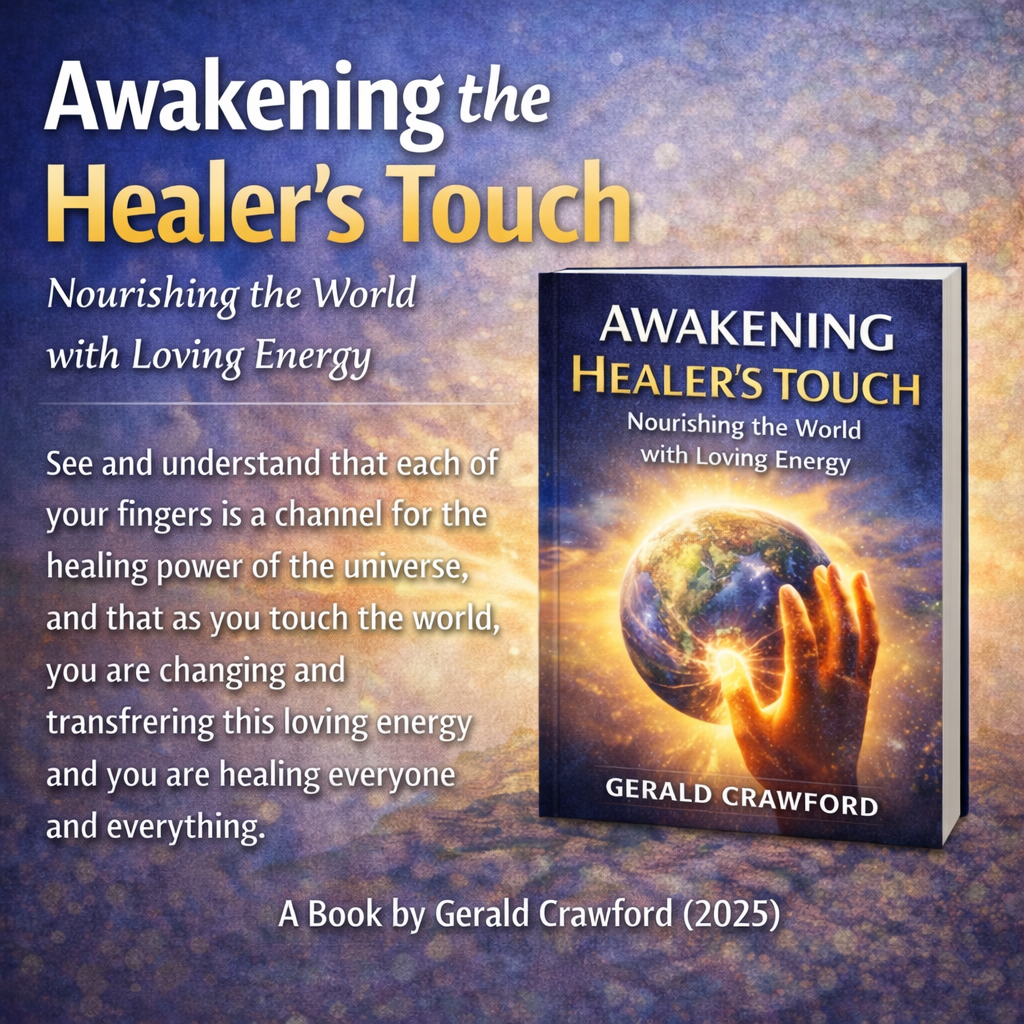
Awakening the Healer’s Touch: Nourishing the World with Loving Energy – A Book by Gerald Crawford (2025)
See and understand that each of your finger is a channel for the healing power of the universe, and that as you touch the world, you are changing and transferring this loving energy and you are healing everyone and everything.
Please have a look at:



Leave a Reply