
A Brief History of the Evolution of Healing and the Role of Touch
The concept of the Healer’s Touch has its roots in ancient healing practices, where touch was a fundamental aspect of diagnosing, treating, and healing the body, mind, and spirit. Let’s take a journey through the evolution of healing and the role of touch in various cultures and civilizations.
Ancient Civilizations (3000 BCE – 500 CE)
In ancient cultures, such as Egypt, China, and Greece, healing was often a holistic practice that combined physical, emotional, and spiritual techniques. Touch was a vital component of these practices, with techniques like massage, acupuncture, and laying on of hands being used to balance the body’s energy and promote healing.
* In ancient Egypt, priests and priestesses used touch to diagnose and treat illnesses, often combining it with spiritual rituals and prayers.
* In traditional Chinese medicine, touch was used to balance the flow of qi (life energy) and restore harmony to the body.
* In ancient Greece, physicians like Hippocrates used touch to diagnose and treat patients, often combining it with herbal remedies and other therapies.
Middle Ages (500 – 1500 CE)
During the Middle Ages, the role of touch in healing became more formalized, with the establishment of monastic hospitals and the development of nursing as a profession. Monks and nuns used touch to care for the sick and injured, often combining it with prayer and spiritual rituals.
* The works of Galen and other Greek physicians were translated into Latin, influencing the development of medicine in Europe.
* The Catholic Church played a significant role in promoting the use of touch in healing, with many monasteries and convents establishing hospitals and infirmaries.
Modern Era (1500 – 2000 CE)
In the modern era, the role of touch in healing underwent a significant transformation, with the rise of scientific medicine and the development of new technologies. While touch was still used in some healing practices, it became less prominent in mainstream medicine.
* The discovery of germs and the development of antibiotics led to a greater emphasis on pharmaceutical treatments and surgical interventions.
* The rise of psychotherapy and counseling led to a greater focus on talk-based therapies, with touch being seen as less relevant.
Contemporary Era (2000 CE – present)
In recent years, there has been a resurgence of interest in the role of touch in healing, with the development of new therapies like massage, acupuncture, and energy healing. The Healer’s Touch has become a central concept in many holistic and integrative healing practices.
* Research has shown that touch can have a profound impact on physical and emotional well-being, reducing stress, anxiety, and pain.
* The development of new technologies, like biofeedback and neurofeedback, has allowed for a greater understanding of the physiological and neurological effects of touch.
Conclusion
The evolution of healing and the role of touch in healing practices has been a long and winding journey, influenced by cultural, spiritual, and scientific factors. From ancient civilizations to modern times, touch has played a vital role in promoting healing, comfort, and well-being. As we move forward in the contemporary era, the Healer’s Touch remains an essential component of holistic and integrative healing practices, offering a powerful approach to promoting overall health and well-being. I hope this brief history has been informative and helpful in understanding the significance of the Healer’s Touch.
This part of the book is for book promotion:
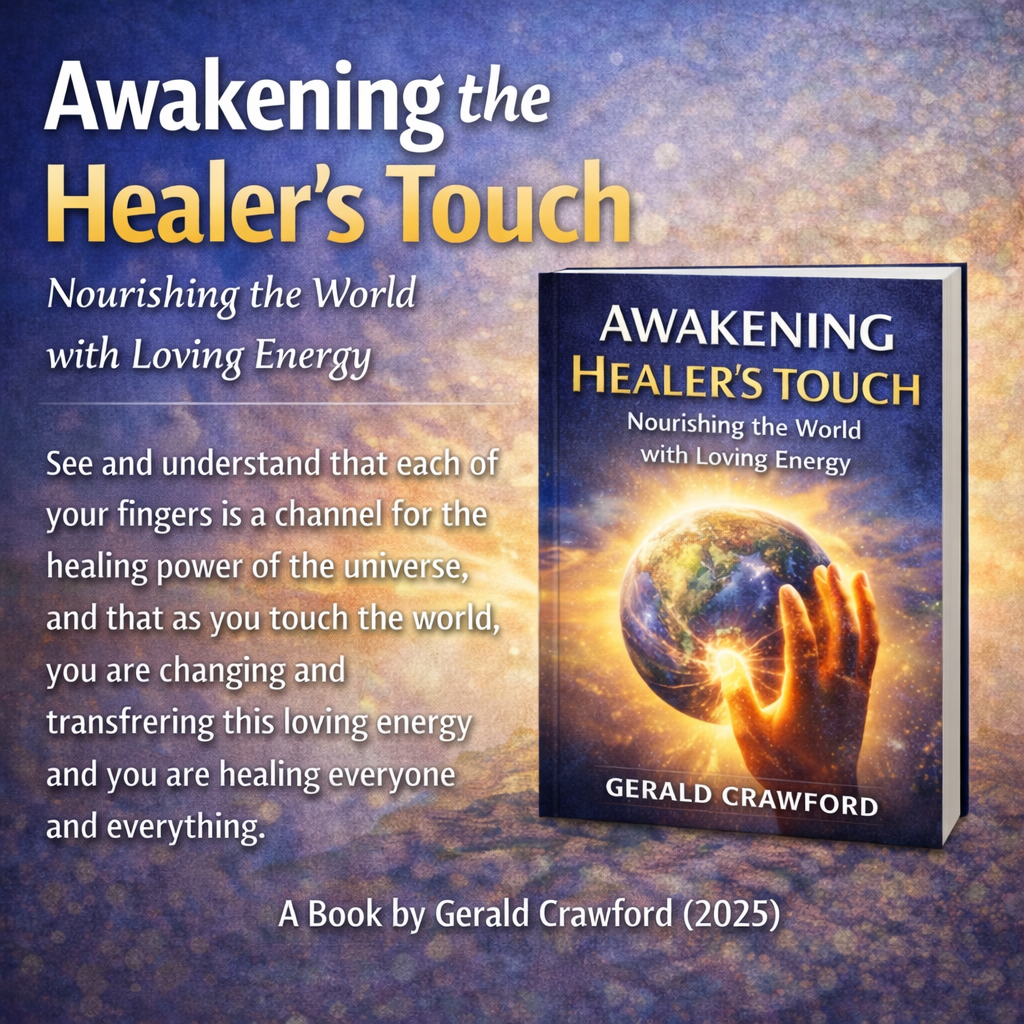
Awakening the Healer’s Touch: Nourishing the World with Loving Energy – A Book by Gerald Crawford (2025)
See and understand that each of your finger is a channel for the healing power of the universe, and that as you touch the world, you are changing and transferring this loving energy and you are healing everyone and everything.
Please have a look at:
- Awakening the Healer’s Touch Mentorship
- 25 Min Motivational Speech on Awakening your Healer’s Touch
- 2 Day Awakening the Healer’s Touch Development Program for a Group



Leave a Reply