Category: (AWAHT Model) Press Kit (Page 1 of 4)
45-Minute Online Event Experience
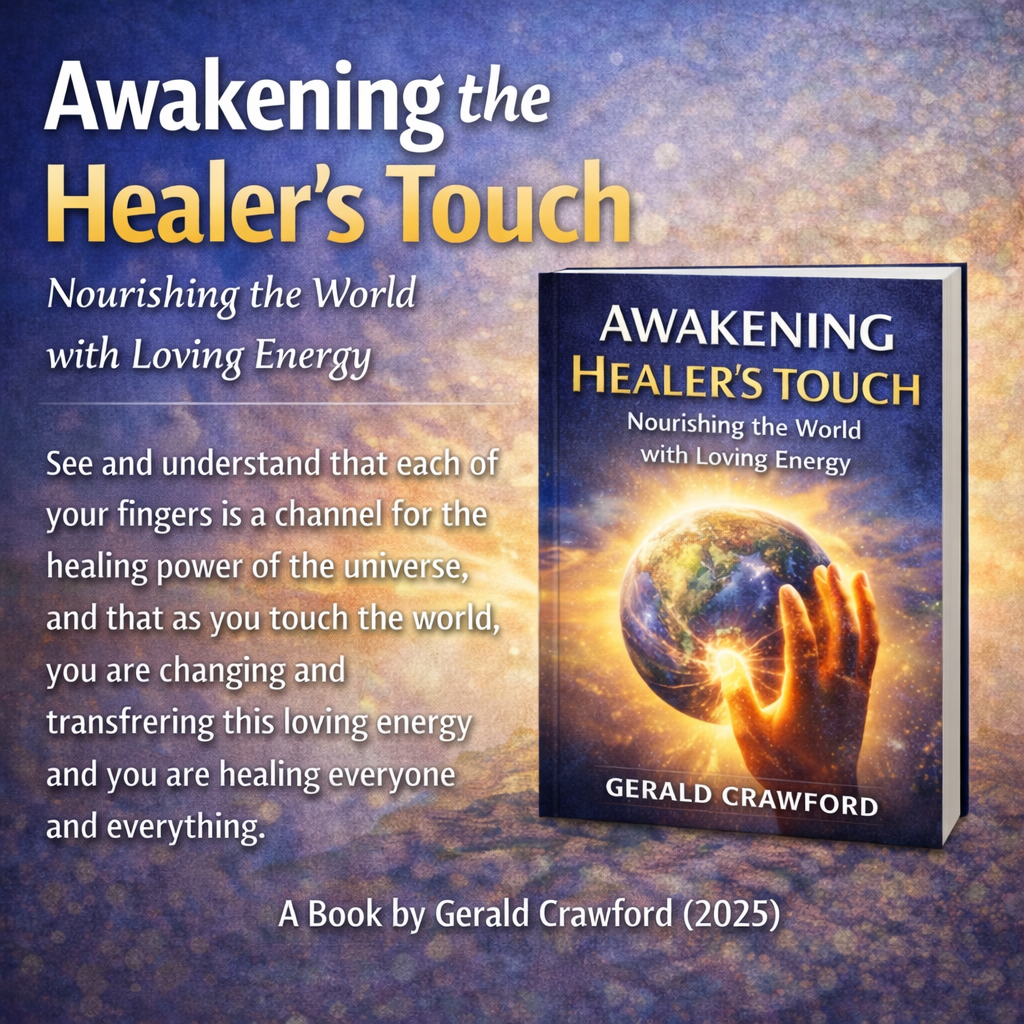
Awakening the Healer’s Touch: Nourishing the World with Loving Energy
With Gerald Crawford
Event Title:
Awaken the Healer Within: A Live Training & Experiential Healing Session
Tagline:
Learn. Experience. Practice. Transform.
Event Purpose
This 45-minute online experience is designed to:
-
Inspire emotional and spiritual awakening
-
Teach the Healing Model framework
-
Guide participants through embodied practices
-
Demonstrate a practical case study
-
Facilitate a live EFT tapping session
-
Provide tools for ongoing transformation
Participants leave not just inspired — but regulated, empowered, and equipped.
45-Minute Event Flow
0–5 Minutes – Opening & Emotional Framing
Tone: Calm, grounded, welcoming.
-
Welcome and intention setting
-
Brief overview of the book’s core message
-
Reflective question:
“What energy are you carrying right now?”
Short grounding practice:
-
Hand on heart
-
Deep breath
-
Awareness of physical presence
5–15 Minutes – The Healing Model Explained
The 5-Part Healing Model
- Awareness
- Intention
- Regulation
- Loving Energy
- Conscious Touch
Explain simply:
Healing is not something you force.
It is something you allow through awareness.
Discuss:
-
Nervous system regulation
-
Energy transmission through presence
-
Why emotional calm begins internally
15–25 Minutes – Practical Case Study (Mini Teaching)
Case Example: Emotional Overwhelm → Inner Calm
Present a real-world scenario:
A professional overwhelmed by stress learns to:
-
Pause before reaction
-
Use hand-over-heart regulation
-
Set conscious intention before interaction
-
Shift from reactive to responsive
Highlight measurable results:
-
Reduced anxiety
-
Improved sleep
-
Healthier communication
-
Increased emotional resilience
Tie back to:
“Peace is transmitted before it is experienced.”
25–38 Minutes – Guided EFT Tapping Session
(Integrated Within the Healing Model)
Step 1 – Identify Emotional Charge
Invite participants to rate current stress from 1–10.
Step 2 – Setup Statement (Karate Chop Point)
Repeat 3 times:
“Even though I feel this stress and tension,
I deeply and completely accept myself.”
Step 3 – Tapping Sequence (Concise & Grounded)
Eyebrow:
“This tension I’ve been carrying.”
Side of Eye:
“This emotional pressure.”
Under Eye:
“I’ve been holding so much.”
Under Nose:
“My body feels tight.”
Chin:
“I allow myself to soften.”
Collarbone:
“I can release what no longer serves me.”
Under Arm:
“I choose calm.”
Top of Head:
“I am safe in this moment.”
Step 4 – Integrate with Healing Touch
Place one hand on heart.
One on abdomen.
Slow breath.
Guide visualization:
“Imagine loving energy flowing through your hands.
You are not forcing healing.
You are allowing it.”
Re-rate emotional level.
38–43 Minutes – Integration & Identity Shift
Teach this powerful reframing:
You are not a container of stress.
You are a channel of healing energy.
Invite participants to reflect:
-
How did your body respond?
-
What changed in your emotional state?
Encourage daily 3-minute regulation ritual.
43–45 Minutes – Closing Activation
Closing message:
The world does not need more force.
It needs more regulated, loving presence.That presence begins with you.
Invite participants to:
-
Practice daily conscious touch
-
Share healing intentionally
-
Live as a channel, not a reactor
End with breath and gratitude.
Event Outcomes
- Participants will leave with:
- A practical healing framework
- Nervous system regulation tools
- EFT tapping experience
- Identity shift toward empowered calm
- Daily integration strategy
Marketing Positioning
This event is ideal for:
- Wellness communities
- Personal growth audiences
- Corporate well-being initiatives
- Therapy groups
- Faith or spiritual communities
Healing Model Case Study 204
Trauma-Informed Application Within a Structured Therapy Model
Case Study 204
Integrating the Healing Model in Trauma-Sensitive Therapy
Profile
Client Name: James R. (Pseudonym)
Age: 46
Presenting Concerns: Childhood trauma history, emotional shutdown during conflict, hypervigilance, difficulty experiencing calm.
Therapeutic Setting: Trauma-informed integrative therapy combining talk therapy, somatic regulation, and guided awareness practices.
Therapeutic Framework Integration
The therapist adapted principles from Awakening the Healer’s Touch into a trauma-sensitive structure emphasizing safety, consent, and nervous system stability.
6-Phase Adapted Model:
- Establishing Safety & Stabilization
- Body Awareness Without Overexposure
- Self-Directed Grounding Touch
- Energy Boundary Development
- Emotional Processing with Regulation
- Integration & Empowered Identity
Phase 1: Establishing Safety
Before introducing any touch-based work, therapy focused on:
-
Emotional safety
-
Psychoeducation about the nervous system
-
Identifying triggers
-
Building trust
James initially experienced touch (even self-touch) as uncomfortable due to trauma associations. Therefore, pacing was critical.
Phase 2: Neutral Body Awareness
Instead of beginning with heart-centered touch, the therapist guided:
-
Awareness of feet on the floor
-
Gentle hand resting on a chair
-
Observing breath without forcing change
This built tolerance for embodied awareness.
Phase 3: Self-Directed Grounding Touch
Only after stabilization did James experiment with:
-
Placing his hand lightly on his forearm
-
Brief hand-over-heart contact (5–10 seconds initially)
-
Practicing self-touch only when he felt in control
He described early sessions as “strange but calming.”
Gradually, his nervous system began associating self-touch with safety instead of threat.
Phase 4: Energy Boundaries
A major breakthrough occurred when James explored the concept:
“I can allow energy to move through me without absorbing it.”
Through guided visualization, he imagined stress flowing past him rather than into him.
Hypervigilance reduced as he stopped bracing for emotional impact.
Phase 5: Emotional Processing
Once regulation improved, trauma memories were processed while maintaining grounding touch and breath awareness.
This dual awareness (memory + present safety) reduced overwhelm.
Emotional flooding decreased significantly.
Outcomes After 16 Weeks
Emotional
-
Reduced hypervigilance
-
Increased emotional tolerance
-
Less shutdown during conflict
Physiological
-
Decrease in baseline muscle tension
-
More stable breathing patterns
-
Improved sleep consistency
Relational
-
Greater ability to remain present during difficult conversations
-
Improved communication with partner
-
Increased sense of internal safety
Clinical Observations
The Healing Model contributed by:
-
Strengthening self-regulation capacity
-
Enhancing somatic awareness
-
Empowering client participation in calming practices
-
Supporting trauma work without retraumatization
The emphasis on being a channel rather than a container helped James shift from bracing against the world to engaging with it more calmly.
Key Insight
For trauma-sensitive clients, the model works best when:
-
Applied gradually
-
Grounded in consent and safety
-
Integrated with evidence-based therapeutic techniques
-
Focused first on stabilization, then emotional processing
Healing became sustainable when James realized:
Peace is not the absence of memory —
it is the presence of regulation.
Awakening the Healer’s Touch: Nourishing the the World with Loving Energy – A Book by Gerald Crawford
Click on the button below to make an appointment booking

Make A Donation and Support the Author

This Banner Space is for Rent with a Hyperlink!

Recent Comments