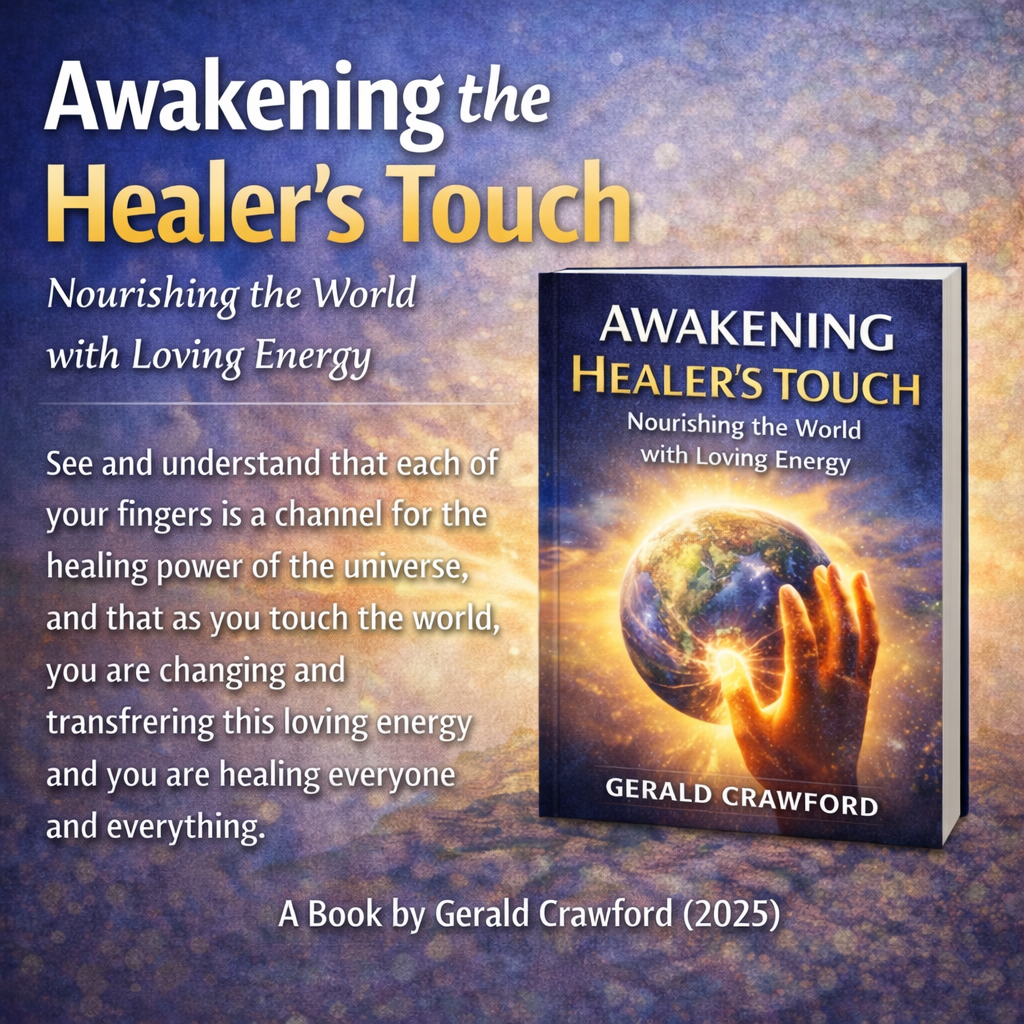
See and understand that each of your finger is a channel for the healing power of the universe, and that as you touch the world, you are changing and transferring this loving energy and you are healing everyone and everything.

Category: 101 Healing Model (Page 2 of 2)

Case Study 204: Applying Awakening the Healer’s Touch: Nourishing the World with Loving Energy – A Book by Gerald Crawford (2025) Information in a Healing Therapy Model

Healing Model Case Study 204

Trauma-Informed Application Within a Structured Therapy Model


Case Study 204

Integrating the Healing Model in Trauma-Sensitive Therapy

Profile

Client Name: James R. (Pseudonym)
Age: 46
Presenting Concerns: Childhood trauma history, emotional shutdown during conflict, hypervigilance, difficulty experiencing calm.
Therapeutic Setting: Trauma-informed integrative therapy combining talk therapy, somatic regulation, and guided awareness practices.


Therapeutic Framework Integration

The therapist adapted principles from Awakening the Healer’s Touch into a trauma-sensitive structure emphasizing safety, consent, and nervous system stability.

6-Phase Adapted Model:

  • Establishing Safety & Stabilization
  • Body Awareness Without Overexposure
  • Self-Directed Grounding Touch
  • Energy Boundary Development
  • Emotional Processing with Regulation
  • Integration & Empowered Identity

Phase 1: Establishing Safety

Before introducing any touch-based work, therapy focused on:

  • Emotional safety

  • Psychoeducation about the nervous system

  • Identifying triggers

  • Building trust

James initially experienced touch (even self-touch) as uncomfortable due to trauma associations. Therefore, pacing was critical.


Phase 2: Neutral Body Awareness

Instead of beginning with heart-centered touch, the therapist guided:

  • Awareness of feet on the floor

  • Gentle hand resting on a chair

  • Observing breath without forcing change

This built tolerance for embodied awareness.


Phase 3: Self-Directed Grounding Touch

Only after stabilization did James experiment with:

  • Placing his hand lightly on his forearm

  • Brief hand-over-heart contact (5–10 seconds initially)

  • Practicing self-touch only when he felt in control

He described early sessions as “strange but calming.”

Gradually, his nervous system began associating self-touch with safety instead of threat.


Phase 4: Energy Boundaries

A major breakthrough occurred when James explored the concept:

“I can allow energy to move through me without absorbing it.”

Through guided visualization, he imagined stress flowing past him rather than into him.

Hypervigilance reduced as he stopped bracing for emotional impact.


Phase 5: Emotional Processing

Once regulation improved, trauma memories were processed while maintaining grounding touch and breath awareness.

This dual awareness (memory + present safety) reduced overwhelm.

Emotional flooding decreased significantly.


Outcomes After 16 Weeks

Emotional

  • Reduced hypervigilance

  • Increased emotional tolerance

  • Less shutdown during conflict

Physiological

  • Decrease in baseline muscle tension

  • More stable breathing patterns

  • Improved sleep consistency

Relational

  • Greater ability to remain present during difficult conversations

  • Improved communication with partner

  • Increased sense of internal safety


Clinical Observations

The Healing Model contributed by:

  • Strengthening self-regulation capacity

  • Enhancing somatic awareness

  • Empowering client participation in calming practices

  • Supporting trauma work without retraumatization

The emphasis on being a channel rather than a container helped James shift from bracing against the world to engaging with it more calmly.


Key Insight

For trauma-sensitive clients, the model works best when:

  • Applied gradually

  • Grounded in consent and safety

  • Integrated with evidence-based therapeutic techniques

  • Focused first on stabilization, then emotional processing

Healing became sustainable when James realized:

Peace is not the absence of memory —
it is the presence of regulation.
Case Study 203: Applying Awakening the Healer’s Touch: Nourishing the World with Loving Energy – A Book by Gerald Crawford (2025) Information in a Healing Therapy Model

Healing Model Case Study 203

Applying the Book’s Principles in a Structured Healing Therapy Model


Case Study 203

Integrating the Healing Model into Therapeutic Practice

Profile

Client Name: Maria K. (Pseudonym)
Age: 35
Presenting Issues: Anxiety, emotional overwhelm, difficulty expressing feelings, chronic chest tightness.
Setting: Integrative therapy practice combining talk therapy with somatic awareness techniques.


The Healing Therapy Model Framework

The therapist incorporated principles from Awakening the Healer’s Touch into a structured 6-phase therapeutic model:

  • Awareness of Emotional Energy
  • Nervous System Regulation
  • Intentional Self-Touch Practices
  • Reframing Identity as a “Channel”
  • Compassionate Presence Training
  • Integration into Daily Life

Phase 1: Emotional Energy Awareness

Maria initially described her anxiety as “something happening to me.”

Through guided reflection, she began identifying:

  • Where tension lived in her body

  • When emotional spikes occurred

  • What internal narratives fueled stress

This shifted her from victimhood to observer.


Phase 2: Nervous System Regulation

Using simple grounding practices:

  • One hand over heart

  • One hand on abdomen

  • Slow diaphragmatic breathing

Within sessions, Maria’s visible tension decreased in minutes.
She described feeling “anchored instead of scattered.”

This built confidence in her ability to self-regulate.


Phase 3: Conscious Self-Touch

Rather than viewing touch as external healing, Maria practiced:

  • Gentle self-soothing gestures

  • Intentional hand placement during anxiety spikes

  • Pausing before reacting in difficult conversations

Over time, her body responded more quickly to calming cues.


Phase 4: Identity Reframe — From Reactive to Channel

A breakthrough moment occurred when Maria reflected:

“If I’m a channel of energy, I don’t have to absorb everything around me.”

This understanding reduced emotional over-identification with others’ stress.

She began visualizing energy flowing through her — not staying trapped within her.


Phase 5: Relational Application

Maria applied the model in real-world interactions:

  • Pausing before responding during conflict

  • Setting calming intention before meetings

  • Maintaining grounded posture during emotional discussions

Conflict frequency decreased.
Emotional resilience increased.


Outcomes After 12 Weeks

Emotional

  • Reduced anxiety intensity

  • Greater emotional vocabulary

  • Increased confidence in self-soothing

Physical

  • Decreased chest tightness

  • More consistent breathing patterns

  • Improved sleep quality

Relational

  • Healthier boundaries

  • Reduced emotional reactivity

  • Stronger communication skills


Clinical Insight

The integration of the Healing Model supported therapy by:

  • Enhancing somatic awareness

  • Improving nervous system regulation

  • Empowering client autonomy

  • Encouraging embodied emotional processing

It complemented traditional therapy by adding an experiential, body-centered dimension rooted in awareness and intention.


Key Takeaway

Applying the principles from Awakening the Healer’s Touch within therapy can:

  • Strengthen emotional regulation

  • Improve mind-body connection

  • Reduce stress reactivity

  • Foster sustained inner calm

Healing became not something “done” to Maria —
but something she actively participated in.

Case Study 202: More Peace and Calm experiencing when living a life with understanding that come from the Healing Model in Awakening the Healer’s Touch: Nourishing the World with Loving Energy – A Book by Gerald Crawford (2025)

Healing Model Case Study 202

Sustained Peace Through Embodied Awareness


Case Study 202

Living Calmly in High-Pressure Environments Through the Healing Model

Profile

Name: David L. (Pseudonym)
Age: 38
Profession: Small Business Owner
Presenting Challenge: Chronic stress, short temper, emotional shutdown during conflict, difficulty relaxing.


Background

David described himself as “driven but constantly tense.”
Running a business required daily decision-making, financial pressure, and staff management. Over time he noticed:

  • Quick frustration with employees

  • Emotional withdrawal at home

  • Shallow breathing

  • Persistent fatigue

  • A sense of being disconnected from himself

He wasn’t looking for spiritual insight — he wanted practical calm.

After engaging with the Healing Model outlined in Awakening the Healer’s Touch, he began applying its principles in structured, repeatable ways.


Healing Model Application

The book’s core understanding — that each person is a channel of loving energy through awareness and intention — became David’s anchor.


Step 1 – Interrupting Reactivity

Instead of reacting immediately during stressful conversations, David adopted a simple pause practice:

  • Both feet grounded

  • One hand resting lightly on the desk

  • One slow breath before responding

This physical grounding reduced impulsive responses by creating a moment of regulation.


Step 2 – Energy Ownership

He stopped blaming circumstances for his stress and began asking:

“What energy am I bringing into this room?”

This reframed stress from external chaos to internal management.


Step 3 – Conscious Touch at Home

Previously emotionally distant, David began greeting his partner with intentional physical presence — eye contact, calm tone, a steady embrace.

Within weeks:

  • Arguments decreased

  • Conversations softened

  • Emotional safety increased


Step 4 – Self-Calming Before Sleep

Each evening, he practiced 3 minutes of hand-over-heart breathing, visualizing stress leaving his body.

Sleep quality improved noticeably within two weeks.


Measurable Changes After 8 Weeks

Emotional

  • Increased patience

  • Reduced irritability

  • Faster emotional recovery

Physical

  • Lower baseline tension

  • Improved sleep consistency

  • Deeper breathing patterns

Relational

  • Improved communication

  • Greater empathy toward staff

  • Increased intimacy at home


Breakthrough Realization

David shared:

“Peace isn’t about removing pressure. It’s about regulating my energy within pressure.”

Understanding himself as a channel rather than a reactor shifted his internal posture.

He no longer tried to control every external variable.
He focused on the quality of energy he transmitted.


Why This Case Matters

Case Study 202 demonstrates:

  • Calm can be cultivated in high-demand environments

  • Intentional presence reduces emotional escalation

  • Small, embodied practices produce measurable relational impact

  • Peace becomes sustainable when rooted in awareness


Core Takeaway

Living with the understanding that your hands, presence, and intention carry healing energy creates:

  • Emotional steadiness

  • Improved decision-making

  • Healthier relationships

  • A more peaceful internal baseline

Healing is not passive.
It is practiced.

And peace becomes a way of being — not a temporary state.

Case Study 201: More Peace and Calm experiencing when living a life with understanding that come from the Healing Model in Awakening the Healer’s Touch: Nourishing the World with Loving Energy – A Book by Gerald Crawford (2025)

Healing Model Case Study 201

More Peace and Calm Through Conscious Living


Case Study 201

Experiencing Greater Peace and Emotional Calm Through the Healing Model

Profile

Name: Sarah M. (Pseudonym)
Age: 42
Profession: HR Manager
Presenting Challenge: Chronic stress, emotional reactivity at home, difficulty “switching off,” mild anxiety symptoms.


Background

Sarah described herself as “always on edge.”
She experienced:

  • Frequent mental overwhelm

  • Irritability with her family

  • Trouble sleeping

  • Physical tension in shoulders and chest

  • A constant feeling of urgency

Despite trying meditation apps and time management tools, she still felt internally unsettled.

After reading Awakening the Healer’s Touch, she began applying the book’s Healing Model, which centers on:

  1. Awareness

  2. Intention

  3. Loving Energy

  4. Conscious Touch

  5. Presence


Intervention Framework

Step 1 – Awareness of Energy State

Sarah began noticing her emotional state throughout the day instead of ignoring it.
She asked herself: “What energy am I carrying right now?”

This simple awareness reduced unconscious reactivity.


Step 2 – Self-Regulation Through Touch

When overwhelmed, she placed one hand on her heart and one on her abdomen for 2–3 minutes while breathing slowly.

Result:

  • Heart rate stabilized

  • Muscular tension reduced

  • Thoughts slowed

  • Emotional intensity decreased

She reported feeling “anchored” rather than scattered.


Step 3 – Intentional Energy Before Interaction

Before entering her home after work, she paused in her car and set an intention:

“I choose to bring calm into this space.”

This prevented emotional spillover from work into family life.


Step 4 – Conscious Presence in Relationships

Instead of multitasking while listening to her children, she practiced full presence — eye contact, gentle touch on the shoulder, calm tone.

The shift was immediate:

  • Fewer arguments

  • More cooperation

  • Softer household atmosphere


Observed Outcomes After 6 Weeks

Emotional Changes

  • Noticeable reduction in anxiety

  • Greater patience

  • Faster recovery after stress

Physical Changes

  • Improved sleep

  • Reduced muscle tension

  • Fewer stress headaches

Relational Changes

  • Increased emotional connection with spouse

  • More positive communication

  • Children mirrored calmer behavior


Core Insight from the Healing Model

Sarah realized:

“Peace isn’t something I wait for. It’s something I transmit.”

By understanding that she was a channel of energy, not a victim of circumstance, she shifted from reactive to intentional living.


Why This Case Matters

This example illustrates that the Healing Model is not abstract spirituality — it is practical emotional regulation and relational transformation.

Peace became her default state not because life changed,
but because her internal energy management changed.


Key Takeaway

Living with the awareness that your hands and presence carry loving energy:

  • Reduces stress reactivity

  • Strengthens relationships

  • Improves nervous system regulation

  • Creates ripple effects of calm

Healing is not dramatic.
It is consistent, conscious, and embodied.

Newer posts »
Back a Buddy Show your Support